-
It is an authentic form of art that came into being without any influence from other artistic trends. The startingpoint was the culture of the Shonatribe in 1958. Sculpting in stone evolved out of the woodcarving tradition.
-
The design and the aura of the sculptures are linked to all aspects of life.
-
The Zimbabwean culture forms the basis, but one sees a lot of similarities general human culture. Sentiments, background and themes play an important part in the image and expression of the sculptures. That is why this form of art is very open to the public.
-
It is a unique intuitive way of sculpting. The artist does not draft anything before he starts. The stone, together with his own emotions, are his inspiration and determine the ultimate result. (Spiritual) experiences and (ancient) stories are often an inspiration for the artist.
-
The way man and animal relate to each other is an important subject for many artists in Zimbabwe. Their mutual interest and dependancy on nature plays an important role.
-
All forms of art like figurative, non-figurative and abstract do appear in the Zimbabwean sculpting, but most often it is a subconsciously chosen form for the artist. It is often only through contact with Europeans and Americans that the artist realises that the form of art actually has a name.
-
This way of sculpting has become a revealing and special form of art during the past forty years. From the plain surface to movement. From Shona culture to modern design. From soapstone to springstone.
-
The work is almost completely manual and the techniques are very refined. Through the manual labour they stay in touch with the rough material and the final sculpture which emerges from the stone.
-
Special attention is given to non materialistic matters. All feelings and thoughts are given an important place in life, especially the African way of dealing with spirits, rituals and family ties.
 Iets over intuïtief beeldhouwen / About intuitive sculpture
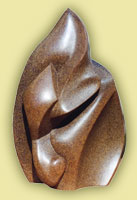 Het is een eigen authentieke kunstvorm die zonder beïnvloeding van andere kunststromingen is ontstaan uit het niets. De cultuur van de Shonastam is het beginpunt geweest in 1958. Het beeldhouwen in steen is opnieuw ontdekt vanuit een houtbewerkingtraditie.
